Morocco Trips: What Nobody Tells You Before You Go
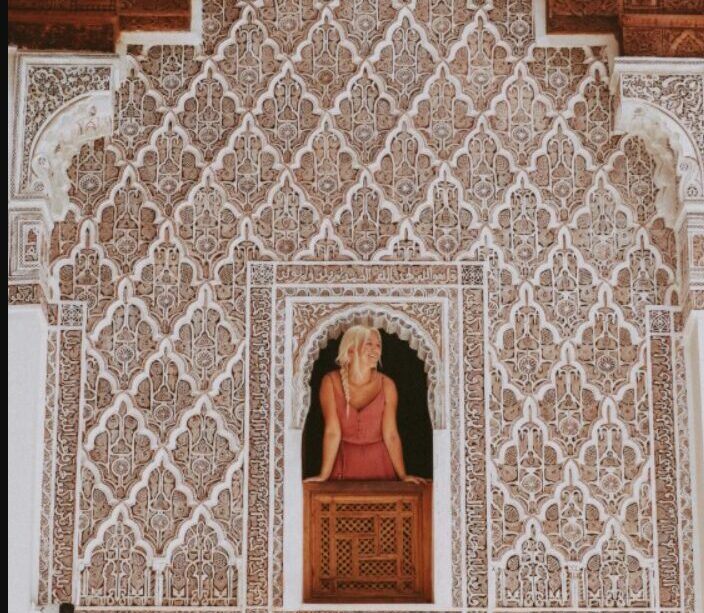
I’ll be honest with you. Before my first trip to Morocco, I read every travel blog I could find. I made spreadsheets. I watched YouTube videos of people wandering through souks looking appropriately amazed. And still, nothing I consumed beforehand came close to preparing me for what it actually felt like to be there. That’s not a complaint. That’s the whole point. Morocco trips have a way of delivering something that researching them simply cannot replicate, and the sooner you accept that gap between preparation and reality, the better traveler you become the moment you land.
The Feeling Nobody Warns You About
You clear customs, step outside, and the air hits you differently. There’s warmth in it even when the temperature is mild. There’s a smell that’s hard to name — something between dried rose petals, cumin, and exhaust — that you’ll recognize instantly on every subsequent visit for the rest of your life. A taxi driver waves at you before you’ve even looked for one. Somewhere behind you a man is arguing loudly and cheerfully on a phone call. A woman in a djellaba walks past with absolute purpose and zero interest in the chaos around her.
This is Morocco saying hello. It doesn’t ease you in gently. It doesn’t give you a quiet corridor to collect yourself. It simply begins, and you either open yourself to that or you spend the first two days fighting it. The travelers who love Morocco most are the ones who stopped fighting it pretty quickly.
Why Morocco Keeps Pulling People Back
Talk to anyone who has been to Tours Morocco more than once and ask them why they went back. The answers are all different but they share a quality. One person went back for the silence of the Sahara at four in the morning. Another went back because they found a riad in Fes on the first trip that felt like the most peaceful place they’d ever slept and they needed to feel that again. Someone else went back because they’d only had three days in Chefchaouen and left feeling unfinished with it.
Morocco is a country that doesn’t give itself up entirely on a first visit. It shows you enough to make you feel like you’ve seen something real, and then on the flight home you start realizing how much you didn’t get to. That’s not a flaw in the destination. That’s what a genuinely deep place does. It gives you reasons to come back.
Marrakech: Beautiful, Overwhelming, Completely Worth It
Every Morocco trip conversation eventually circles back to Marrakech, and that’s not just because most international flights land there. It’s because Marrakech does something to your senses that cities with twice its reputation rarely manage. Djemaa el-Fna, the central square, is the obvious starting point and also one of those rare places that actually exceeds what you were told about it.
In the morning the square is calm enough to sit in with a coffee and watch it wake up. By afternoon it’s a moving, breathing organism of orange juice carts, henna artists, and snake charmers working the same patches of ground their predecessors worked for generations. After dark it transforms completely into something that feels closer to a traveling carnival than a city center, with smoke rising from dozens of grills and the smell of harira soup drifting between the tables that appear each night and vanish before dawn.
The medina behind the square is where the real Marrakech lives. Narrow streets that seem to deliberately resist any logical navigation. Workshops where craftspeople are doing things by hand that somewhere else would require a factory. Small doors in anonymous walls that open into riads with fountains and orange trees and more beauty than the exterior remotely suggests. Getting lost in the Marrakech medina, genuinely lost with no GPS and no plan, is one of the better things you can do on your first day there. You will end up somewhere interesting. That’s essentially guaranteed.
Beyond all of that, the Majorelle Garden is worth the queue and the entry fee. The Bahia Palace shows you what ambition looked like in nineteenth century Morocco. The Saadian Tombs, hidden behind a sealed wall for three full centuries before being rediscovered in 1917, are the kind of thing that makes you stop walking and just stand there for a while.
The Sahara: The Part That Changes Your Internal Compass
The drive from Marrakech to the Sahara is itself one of the great journeys in this part of the world. The road climbs through the High Atlas Mountains over the Tizi n’Tichka pass at over two thousand meters, where the air gets noticeably thinner and the views open up in every direction. Then it descends into the Ouarzazate region, through the Draa Valley where palm oases run in an unbroken green ribbon through orange desert, past kasbahs built from earth that look like they grew from the ground rather than being constructed on it.
Erg Chebbi near Merzouga is where most Morocco desert trips reach their destination. The dunes here climb to nearly one hundred and fifty meters and they do something different with light at every hour. Early morning they’re pale and almost cold looking. At noon the orange deepens into something warmer. Sunset turns them colors that your phone camera will try to capture and mostly fail at, which is fine because the point of being there isn’t the photograph anyway.
Spending a night in the desert rather than just visiting for a few hours is the difference between seeing the Sahara and actually feeling it. A camel trek in at dusk, a night in a camp under stars you forgot existed because you’ve been living in cities, and waking up before dawn to climb to a high dune and watch the sun come back — that’s not a tourist activity. That’s a genuine experience of something ancient and enormous that puts your ordinary life in a perspective it rarely gets.
Fes: The City That Rewards Patience
Fes is not trying to impress you. That’s the first thing to understand about it. Marrakech wants your attention and works openly for it. Fes operates entirely on its own terms and invites you to keep up if you’re interested. The travelers who respond most strongly to Fes are usually the ones who arrive with genuine curiosity rather than a checklist.
The old city, Fes el-Bali, has been a UNESCO World Heritage Site long enough that the designation feels like an understatement rather than a marketing tool. The Kairaouine mosque and university at its center has been functioning continuously since 859 AD, which means it’s been operating for over eleven centuries. Walk the street outside it and try to actually hold that number in your mind. The stones under your feet were worn smooth by people who walked there when Europe was still figuring out the early Middle Ages.
The tanneries are the image most associated with Fes and they deliver on their reputation. Stone vats filled with dyes in terracotta, saffron yellow, and deep indigo, surrounded by workers moving hides through the process in a way that hasn’t fundamentally changed in centuries. The surrounding shops hand you mint sprigs before bringing you to the rooftop viewing terraces, and you’ll understand why the moment the wind shifts. The smell is significant. The view is worth it completely.
Give Fes at least two full days. Three is genuinely better. The city opens up incrementally and the people who rush through in an afternoon leave knowing they missed most of it.
Chefchaouen: The Blue City That Actually Lives Up to Its Photos
Chefchaouen has a slight reputation problem, which is that it’s been photographed so many times that people arrive half expecting a disappointment. They don’t usually get one. The blue walls are genuinely that blue. The mountain setting above the city is genuinely that beautiful. And the overall mood of the place is genuinely more relaxed than almost anywhere else in Morocco, which after several days in Marrakech or Fes feels like a physical relief.
The medina here is smaller and more navigable than the imperial cities without being any less interesting. The hiking above town into the Rif Mountains is excellent if you have the energy and the footwear for it. And the slower pace gives you space for the kind of unhurried afternoon that’s difficult to find in Morocco’s bigger, more intense cities. Sitting at a cafe with a pot of mint tea while nothing particular happens is, it turns out, one of the more satisfying ways to spend two hours in this country.
Finding the Right Help for Your Trip
Morocco is absolutely doable independently. Plenty of people do it every year with nothing more than a good map app and a willingness to figure things out as they go. But having someone who genuinely knows the country in your corner opens doors that independent travel rarely manages in a limited amount of time. Not metaphorical doors. Actual ones, sometimes literally — workshops and homes and family restaurants that don’t appear in any travel guide because they were never written up for tourists.
Travelers who want Morocco trips built around that kind of genuine local knowledge rather than a standard tourist route will find that Morocco Trips through Marrakech Morocco Tours are designed by people who actually live and work in this country and understand how to make it reveal itself properly.
The difference shows up in small things that add up to a completely different experience. The riad that’s inside the medina instead of a hotel that’s technically nearby. The lunch stop at a family place in a village rather than the tourist restaurant at the main road. The driver who knows which section of a mountain drive is worth slowing down for and actually slows down for it.
A Few Honest Practical Notes
Morocco uses the dirham, which you can’t get outside the country, so plan to exchange money after you land. ATMs are widely available in cities. Tipping is a real part of how the local economy works and not an optional gesture — guides, drivers, riad staff, and restaurant servers include tips in their actual income expectations, so budget for it genuinely.
Spring is the sweet spot for most Morocco travel. March through May gives you comfortable temperatures almost everywhere, occasional greenery in the mountains that disappears fast once summer arrives, and fewer tourists than the peak winter holiday season. Autumn runs a close second. Summer on the coast is fine. Summer in Fes or Marrakech is genuinely brutal in a way that can overwhelm an itinerary if you’re not prepared for forty plus degree heat by midday.
Dressing modestly when you’re moving through traditional neighborhoods and religious areas isn’t a rule imposed on visitors. It’s a quiet gesture of respect that comes back to you in the way people engage with you. Morocco notices these things and responds to them.
Conclusion
Here’s the simplest thing I can tell you about Morocco trips after everything else has been said. The travelers who get the most out of this country are the ones who come with genuine openness rather than fixed expectations, who give themselves enough time to let places land rather than rushing past them, and who find good people to help them navigate a country that rewards trust far more than it rewards suspicion. Plan the structure carefully. Then hold it loosely. Morocco will fill in everything you didn’t think to plan, and those parts are usually the best parts of the whole trip.
FAQ
Q: How many days do I actually need for Morocco to feel like more than a highlight reel? A: Seven days is a workable minimum if you’re focused and not trying to cover the whole country. Ten days gives you room to breathe. Two weeks is genuinely ideal if your schedule can stretch that far, because Morocco consistently rewards the travelers who aren’t constantly rushing toward the next destination.
Q: Is Morocco safe for people traveling alone for the first time? A: Yes, genuinely. Morocco is safe for solo travelers including first-timers, and most people find locals friendly and helpful once you get past the tourist-area hustle that exists in any major medina. Having a reliable local contact or reputable tour operator makes the whole experience significantly richer and removes a lot of the logistical stress that solo travel in an unfamiliar country involves.
Q: What’s the single thing most people wish they’d done differently on Morocco trips? A: Stayed longer in fewer places. Almost universally, travelers who tried to cover too much come back wishing they’d gone deeper into two or three destinations instead of skimming the surface of six. Morocco is a country that opens up slowly and generously to the people who give it time.